
Buyer’s Guide
Metal vs Wood vs Composite Raised Garden Beds, Which Lasts Longest
Disclosure: we may earn a commission when you buy through some links on this page, at no extra cost to you. It does not affect what we recommend or how we rank it. How this works.
Galvanized steel lasts the longest. It needs the least upkeep. Cedar looks the best, and it is the easiest material to build with. Composite costs the most. It sits in between the other two on price and on lifespan.
Steel suits a gardener who wants to build once and forget about it. Cedar suits anyone who wants a natural look and an easy build. Composite suits a gardener who wants almost no upkeep and can pay more for it. None of the three is wrong. It depends on your budget, your climate, and how long you plan to stay put.
Last updated: August 31, 2026· Sourced from university extension services, USDA research, and maker specifications.
Raised Bed Materials at a Glance
Here is how the main options compare. Service life numbers are sourced, not guessed. Wood depends a lot on your climate and how wet the soil around it stays.
| Material | Service life | Cost | Maintenance | Heat behavior | Best suited to |
|---|---|---|---|---|---|
| Galvanized steel | Zinc coating can outlast every material here, in good soil. Bed brands back beds with 2 to 5 year warranties. | Moderate to high | Very low. Keep soil near neutral pH. | Wall runs hot in full sun. Interior soil stays cooler. | Growers who want to build once and stay put |
| Cedar or redwood, untreated | 20+ years in above-ground tests, for heartwood. Bed walls sit against wetter soil, so expect less. | Higher than pine, lower than composite | None required. Ages to silver-gray if left unfinished. | Insulates. Does not transfer wall heat to soil. | A natural look and an easy, tool-light build |
| Douglas fir or pine, untreated | 9 to 16 years above ground, in the same tests. Shorter in wet ground contact. | Lowest | Plan to rebuild sooner. A liner slows rot a little. | Same as cedar, just shorter-lived | A first bed, or testing a spot before committing |
| Pressure-treated pine (ACQ or copper azole) | Built to outlast the same untreated wood, if it carries a ground-contact (UC4A) stamp | Low to moderate | Low. Some gardeners add a plastic liner for peace of mind. | Same as untreated wood | Budget builds meant to last, once you read the safety notes below |
| Composite (recycled plastic and wood fiber) | 10 to 20 year written warranties from major brands. The longest of any material here. | Highest | Lowest. Nothing to seal, paint, or replace. | Behaves like wood, not bare metal | Growers who want to pay once and stop thinking about it |
Composite makers put a longer number in writing than steel makers do. That does not mean composite outlasts steel. It means composite brands are more willing to guarantee a figure. The American Galvanizers Association rates zinc coating life by soil moisture, pH, and salt content. It does not give one fixed number. Birdies backs its steel with a 5 year warranty. Frame It All backs its capped composite with 20 years. Treat both numbers as a floor, not a ceiling.
Does a Metal Raised Bed Cook the Soil?
This is the most common worry about steel beds. The wall does get hot. On a sunny afternoon, a dark steel panel can be too hot to touch. That part is true. Check it with your hand.
What matters more is the soil, not the wall. Soil holds heat differently than metal. It has more mass. It does not conduct heat the way thin steel does. Soil a few inches from the edge stays far cooler than the wall itself.
The real risk sits at the edge, not across the whole bed. Soil pressed against the inside wall can run warmer than soil at the center. This matters most in the top few inches. Heat above a crop’s comfort range slows water and nutrient uptake. That is the general finding from University of Nebraska-Lincoln Extension. No study has set an exact cutoff for a steel-walled bed, though.
This mostly matters in full sun, in a hot climate, with dry soil. Mulch the top few inches. Keep the soil moist. Dry soil swings in temperature faster than moist soil. Leave a couple of inches between the wall and heat-sensitive plants. In zone 5 or 6, that extra warmth is usually a good thing. It is why steel beds warm up and become plantable earlier in spring.
Wood Species That Matter
Not all wood rots at the same rate. University of Missouri Extension and Clemson Cooperative Extension agree. Both recommend cedar or redwood over Douglas fir or pine.
The only controlled longevity numbers come from a different kind of test. A 1995 USDA Forest Service study built test units from two dozen wood species. It mounted them above ground on a fence, not buried in soil. Douglas fir heartwood, cedar heartwood, and redwood all lasted 20 years or more. Douglas fir sapwood, which is what most dimension lumber actually is, averaged 16 years. Pine sapwood averaged 9 to 13 years, depending on the species.
A raised bed is a harder test than a fence. The inside face of every board sits against damp soil all season. Irrigation keeps it wetter than rain alone would. The same study found this directly. Thick Douglas fir heartwood lasted only 12 years at a wetter, hotter site. The same wood lasted 20-plus years in a drier climate. The reason was moisture. Wet wood gives decay fungi more time to work.
Treat the above-ground numbers as a ceiling, not a promise. Cedar and redwood should still outlast fir and pine in a raised bed. But the wet, buried side of the boards will fail first. This happens most with daily irrigation. Heartwood boards hold up better than sapwood. Most retail lumber does not separate the two on the label, though.
The Treated Lumber Question
This is the question every new bed builder asks. The internet gives a scarier answer than the current evidence supports.
Older pressure-treated lumber used chromated copper arsenate, or CCA. CCA contains arsenic. Makers agreed to stop treating wood with CCA for home use. This took effect at the end of 2003. The EPA was part of that deal. Wood treated before 2003 could contain arsenic. New wood sold today does not.
Lumber sold today almost always uses ACQ or copper azole instead. This covers decks, fences, and raised beds. Both use copper as the active ingredient, not arsenic. University of Maryland Extension calls micronized copper azole low in toxicity. It cites research on this question. Copper levels rose only within about an inch of a treated wall. There was no measurable rise in the roots or tubers of nearby radishes, carrots, and potatoes. University of Missouri Extension cites a 2007 study on ACQ. That study looked at copper exposure from ACQ-treated wood. It is not expected to harm adults or children.
None of this means treated wood is risk-free. The National Pesticide Information Center recommends planting food crops a little farther from treated walls. It is run jointly by Oregon State University and the EPA. Soil next to the wood carries higher chemical levels than soil further in. The center also recommends washing produce grown near treated wood, as routine practice.
Want zero uncertainty? Line the inside of a treated bed with heavy plastic sheeting. Or use cedar, steel, or composite instead. If your wood predates 2003, skip it for a food garden. The same goes if you are not sure when it was treated. That older stock has a real, documented arsenic question. The evidence on modern, copper-based treatment looks good. It is not unanimous, though. An extension office beats a forum thread if you want the latest word.
How Deep Does a Raised Bed Actually Need to Be?
Kits are often built 10 to 12 inches deep. That is enough for more crops than most new gardeners expect.
University of Maryland Extension recommends at least 8 inches for leafy greens, beans, and cucumbers. It recommends 12 to 24 inches for tomatoes, peppers, and squash. University of Missouri Extension puts the general minimum at 6 to 12 inches for most vegetables. Go deeper where you can.
Root crops are the real reason to go deep. Carrots and parsnips want loose, open soil to push into. A shallow bed over hard native soil stops a carrot cold. Over already-loose native soil, roots just keep going past the frame. Depth matters less there.
So here is the honest answer. Ten inches is fine for greens, herbs, beans, and most compact vegetables. Go to 18 inches or more for carrots, parsnips, and other root crops. This matters most over compacted or clay soil. Go deeper too if you fill the bed with a soil mix. Skip the native ground below in that case.
When You Should Not Buy a Kit
A raised bed is four boards and a way to join the corners. That is the whole product.
A kit sells convenience: pre-cut boards, matched hardware, and a fast build. That convenience usually costs more per square foot than buying lumber and brackets yourself.
Skip the kit if you own a saw, or can borrow one. You just need to measure and cut four boards to length. A set of corner brackets and any straight lumber builds close to the same bed. It costs less. Use cedar, pine, or reclaimed wood. Brackets are what actually save time. They swap notched or mitered corners for a straight, screwed joint.
Buy the kit if you want exact sizes, boxed and ready. Buy it if you have no way to cut lumber. Buy it if you want a material like galvanized steel. A hardware store 2x8 cannot give you that.
Common Mistakes
Building it too wide to reach the middle
Anything wider than 4 feet means kneeling or leaning to reach the center. Keep beds 3 to 4 feet wide if you can walk around both sides. Go narrower against a fence or wall.
Sealing off the bottom
A solid bottom traps water and drowns roots. Every material here works best open to the native soil below. Do not seal it off.
Filling it with straight bagged topsoil
Bagged topsoil compacts hard inside a frame. Mix it with compost and a coarse material like perlite. That mix drains and holds air the way raised bed roots need. Making your own compost? See our guide to compost tumblers.
Ignoring the corners
Corners take the most stress from soil and weather. A bed that fails usually fails at a corner joint first. That joint might be a screw, a bracket, or a weld.
Planting right against a metal or treated wall
Leave two or three inches of buffer. It costs nothing. It removes two objections at once: heat and chemical migration.
Related reading
Garden Trellis Systems: Matching the Support to the Crop
Growing vertically out of the beds you just built
Best cold frames for homesteads
A cold frame sits on top of a raised bed and stretches the season further
Best greenhouse kits for homesteads
The next step up once a few raised beds are not enough
Best seed starting supplies
What to grow indoors before it ever reaches the new bed
Best worm bins for vermicomposting
Another way to build the soil mix a deep bed needs
Supplies you will buy again
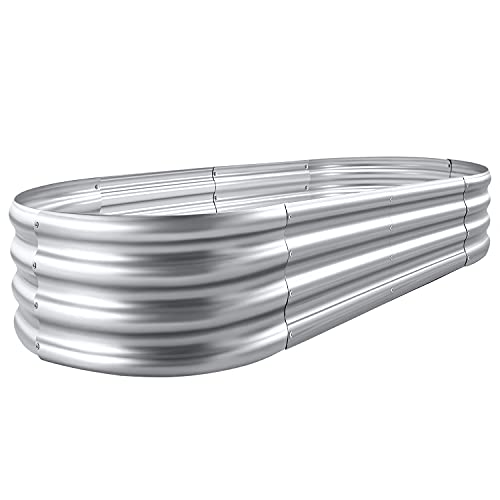
Land Guard galvanized steel raised bed kit
Q195 galvanized steel with a double anti-corrosion coating and an open base, so water drains out instead of sitting against the roots.
No fixed lifespan is listed. The wall runs hot to the touch in full sun, but soil a few inches in stays far cooler. Neutral soil is easier on the zinc coating than acidic, wet soil.
Check price on Amazon
Greenes Fence premium cedar raised bed kit
U.S.-grown cedar, 3/4 inch boards, and dovetail corners that lock together with no tools or screws.
17.5 inches deep, enough for root crops. Left unfinished, it fades to silver-gray instead of rotting.
Check price on Amazon
Alffun raised bed corner brackets (8-pack)
For building a bed from your own boards instead of buying a kit. Four boards and a set of these make a bed in under an hour.
Fits 12 to 24 inch boards. The brackets stack, so you can add a second layer later for more depth.
Check price on Amazon
Common questions
Does a metal raised bed cook plant roots?
Not usually. The wall gets hot in full sun. But soil holds heat differently than thin metal. Soil a few inches from the edge stays much cooler than the wall. The real risk is narrow. It is soil pressed against the inside wall, in full sun, in a hot climate, with dry soil. Mulch the top. Keep the soil moist. Leave a couple of inches between the wall and your most heat-sensitive plants.
Is pressure-treated wood safe for a vegetable garden?
Modern pressure-treated lumber uses copper-based preservatives. It is not the old arsenic-based CCA treatment. CCA was pulled from home use at the end of 2003. University research shows copper increases mostly stay within about an inch of the wood. They do not show up in the roots or tubers of nearby vegetables. Extension services still suggest planting a few inches back from treated walls. They also suggest washing produce grown near them.
How deep should a raised bed be?
Ten to 12 inches works for leafy greens, herbs, beans, and most compact vegetables. Extension guidance puts tomatoes, peppers, and squash at 12 to 24 inches. Long taproots like carrots and parsnips do best with 18 inches or more of loose soil. This matters most over compacted or clay ground.
What lasts longer, cedar or redwood?
Both resist rot naturally, and both outlast pine or Douglas fir in the same spot. Above-ground USDA testing rated redwood and cedar heartwood about the same, at 20 years or more. That test did not bury the wood in soil the way a raised bed does. Treat the number as a ceiling, not a guarantee, especially in a wet climate.
What is the cheapest way to build a raised bed?
Buy straight dimension lumber, pine or Douglas fir, and a set of corner brackets. Cut four boards to length. Screw them into the brackets and set the frame on open ground. It costs a fraction of a kit and takes about an hour. Expect to rebuild it sooner than a cedar, steel, or composite bed.
Does a raised bed need a solid bottom?
No. Most manufacturers and extension guides recommend an open bottom. It lets water drain into the native soil instead of pooling. It also lets roots grow past the frame instead of hitting a barrier. A solid bottom traps water. It is more likely to rot or rust the frame from underneath.
Affiliate Disclosure: Some links on this page are affiliate links. If you buy through them, we earn a small commission at no extra cost to you. This supports the site and keeps our reviews independent. Full disclosure.