
Buyer's Guide
Best Worm Bins for Vermicomposting (2026), Stacking Trays vs Continuous Flow
Disclosure: we may earn a commission when you buy through some links on this page, at no extra cost to you. It does not affect what we recommend or how we rank it. How this works.
Worm castings are the highest-quality amendment you can put in garden soil. Red wigglers eat half their body weight in food scraps daily and turn kitchen waste into something your plants would pay for if they had wallets.
Last updated: October 6, 2026· Based on community data from r/vermicomposting, r/homesteading, and organic gardening forums
What Worms Actually Produce
Worm castings are not just compost, they are a concentrated soil amendment with measurably higher nutrient levels than regular compost or garden soil.
5x
More nitrogen than regular garden soil
7x
More phosphorus than regular garden soil
11x
More potassium than regular garden soil
- 1 lb of red wigglers processes about 0.5 lbs of food waste per day
- Worm tea (liquid that drains from the bin), dilute 1:10 with water for an immediate liquid fertilizer your plants can use right away
- Output comparison: A 4-tray Worm Factory 360 with a mature 2-lb colony produces roughly 2-4 lbs of castings per month, enough to top-dress a 50 sq ft garden bed
Quick Picks
- Best overall: Worm Factory 360 , stacking trays, worm tea spigot, expandable to 8 trays, $130
- Best for beginners: Uncle Jim's Worm + Bin Bundle , everything to start in one order, $80
- Best for small spaces: Tumbleweed Can-O-Worms , compact stacking design, apartment-friendly, $85
- Best production scale: Hungry Bin Continuous Flow , harvest castings from the bottom without disturbing worms, $430
Single Bin vs Stacking Trays vs Continuous Flow
The biggest frustration in vermicomposting is harvesting castings without losing your worm colony. The design of your bin determines how hard this is.
| System | How Harvest Works | Effort | Best For |
|---|---|---|---|
| Single tray bin | Dump and hand-sort worms from castings | High, time-consuming | Beginners testing the hobby |
| Stacking trays | Worms migrate up, remove bottom tray when empty | Low, mostly hands-off | Most homesteaders |
| Continuous flow | Push castings out from the bottom, worms stay at top | Lowest, minimal disturbance | High-volume, serious composters |
| Fabric bag | Harvest via bottom zipper, worms avoid bottom | Low | Small spaces, minimal setup |
Our Top Picks

Worm Factory 360 (4-Tray)
Nature's Footprint
$100 to $200
4-tray stacking design expandable to 8 trays. Worms migrate upward, leaving finished compost below. Spigot for liquid worm tea. Best overall for serious composters.
+Stacking tray system — worms migrate up, finished compost stays below
+Spigot for draining liquid fertilizer (worm tea)
-Takes 2-3 months to get productive
-$130 upfront cost
Best overall worm bin for serious composters. The stacking tray system solves the biggest vermicomposting challenge: separating finished compost from the active worm colony. Worms naturally migrate upward to new food, leaving finished castings below. The worm tea spigot is a bonus — dilute it for a liquid fertilizer that plants love.

Uncle Jim's 250-Count Red Wiggler Composting Worms
Uncle Jim's Worm Farm
Under $50
Everything you need to start in one order. Uncle Jim's is the most trusted red worm supplier in the US. Best starter kit for beginners who want to try vermicomposting.
+Everything needed to start in one order — bin + worms
+No need to source worms separately
-Basic bin is a single tray — no stacking advantage
-Will need to upgrade bin as worm population grows
Best starter kit for anyone who wants to try vermicomposting without buying everything separately. Uncle Jim's ships healthy worms used to different climates. The basic bin is functional but you will likely want to upgrade to a Worm Factory 360 once you get hooked.
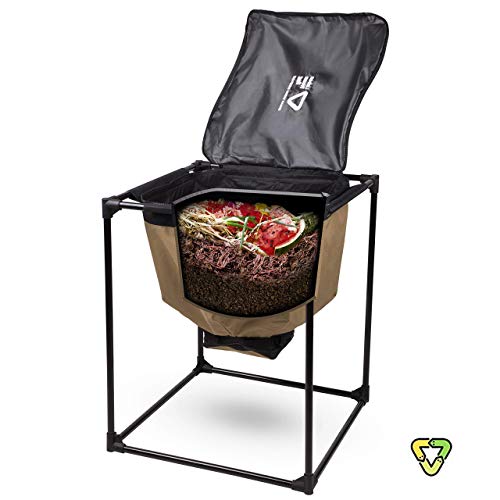
Urban Worm Bag Version 2
Urban Worm
$100 to $200
Breathable fabric design with natural aeration. Harvest from the bottom via zipper without disturbing worms. Best for medium-volume kitchen waste processing.
+Fabric breathes naturally — better aeration than plastic bins
+Harvest from the bottom via zipper without disturbing worms
-Fabric wears out over time (2-4 years)
-Must be hung or placed on a stand — not self-supporting
Best for homesteaders who process medium quantities of kitchen waste and want a simpler setup than stacking trays. The fabric breathes naturally, which helps maintain the right moisture and temperature. The zipper harvesting design is clever. No worm tea collection is the main trade-off vs spigot-equipped bins.
Getting Started: First 90 Days
Week 1-2: Setup
Set up bedding (shredded newspaper + coconut coir), add worms, and add a small amount of food scraps. Do not overfeed early. The colony needs to establish before it can process large volumes. Leave a light on above the bin for the first few days.
Month 1-2: Building Up
Feed every 3-5 days, burying food under bedding to discourage fruit flies. Add a small handful of shredded cardboard each time you feed. Monitor moisture, the bin should feel like a wrung-out sponge. Drain the worm tea spigot weekly.
Month 3: First Harvest
With a stacking tray system, the bottom tray should be mostly castings by month 3. Move it to the top and replace with a new tray and fresh bedding. The worms will migrate up in 2-3 weeks, leaving finished castings below ready to harvest.
How to Use Castings
Use castings as a top dressing (1/2 inch layer around plants), mix into potting soil (up to 25%), or brew compost tea. Dilute worm tea 1:10 with water and apply directly to the root zone. Unlike synthetic fertilizers, you cannot burn plants with worm castings even at high concentrations.
Complete the Compost Loop
Worm bins handle kitchen scraps. For garden waste, leaves, stalks, pulled plants, a compost tumbler handles the bulk volume and turns it into finished compost in 4-8 weeks.
Read our compost tumbler buyer's guide →Worth Having Alongside
Each of these solves a problem this guide raises.

Coco coir bedding
The bedding a new bin is started on, and the thing most first-time worm keepers underestimate the quantity of.
Rehydrate the brick before adding. Dry coir pulls moisture out of the bin and the worms with it.
Check price on Amazon
Common questions
What do worms eat?
Red wigglers eat most non-meat food scraps: fruit and vegetable peels, coffee grounds and filters, tea bags, crushed eggshells, shredded newspaper and cardboard, bread, pasta, and cooked grains in small amounts. Avoid meat, fish, dairy, oily foods, citrus in large amounts, and anything with strong preservatives. Worms also eat their bedding, shredded newspaper, cardboard, and coconut coir work best. A healthy worm bin smells like fresh earth, not rotting food.
How do I keep worms from escaping?
Worms escape when conditions in the bin are wrong: too wet, too dry, too acidic, too much protein, or no bedding. Check these first: moisture level should be like a wrung-out sponge (not dripping), pH should be neutral (add crushed eggshells if too acidic), avoid overfeeding (a 2-lb colony eats about 1 lb of food per day, start with less). Worms also escape during the first 24-48 hours after setting up a new bin while they explore, leave a light on above the bin for the first few days, as worms avoid light.
Can I use a worm bin in an apartment?
Yes. A well-maintained worm bin has no odor, it smells like fresh soil. The Tumbleweed Can-O-Worms and Urban Worm Bag are the most apartment-friendly options. Both fit under a kitchen counter or on a balcony. Keep the bin between 55-77°F (room temperature) and avoid placing it in direct sunlight or near a heat source. Worm bins are one of the few composting methods that work without outdoor space.
How do I harvest worm castings without losing worms?
Stacking-tray bins (Worm Factory, Can-O-Worms) solve this naturally: worms migrate upward to new food, leaving finished castings in the bottom tray. Remove the bottom tray, harvest the castings, and return the empty tray to the top of the stack. For single-bin setups, the dump-and-sort method works: dump the bin contents on a tarp, make small piles, and shine a light on them, worms dive away from light. Repeat with each pile until only castings remain. The Hungry Bin and Urban Worm Bag have bottom-access harvesting that lets you remove castings without touching the worm colony.
What temperature do worms need to survive?
Red wigglers (Eisenia fetida) thrive between 55-77°F. Below 50°F, worms slow dramatically and stop eating. Below 40°F, they may die. Above 85°F, worms become stressed and may try to escape. Keep bins indoors during winter in cold climates, or insulate an outdoor bin with straw bales in mild winters (zones 7+). In summer heat, move the bin to a cool basement or shaded area. The bin's internal temperature is usually a few degrees warmer than the surrounding air due to microbial activity.
Affiliate Disclosure: Some links on this page are affiliate links. If you buy through them, we earn a small commission at no extra cost to you. This supports the site and keeps our reviews independent. Full disclosure.
Models people still search for, that you cannot currently buy
These are kept because owners still look them up. They are not ranked above, and they are not a current recommendation.
- Tumbleweed Can-O-Worms 3-Tray. No purchase path we can verify. Tumbleweed is an Australian maker and we could not confirm a current US retail page. The Worm Factory 360 above is the buyable tray system.