
Seasoning and Storing Firewood
Disclosure: we may earn a commission when you buy through some links on this page, at no extra cost to you. It does not affect what we recommend or how we rank it. How this works.
Most complaints about a wood stove are complaints about wet wood. The fire will not catch, the glass goes black, and the room never really warms up. The stove is usually fine.
The short version
- Under 20 percent moisture. That is EPA's figure, and it is measurable.
- Split it first. Bark resists drying. A split face does not.
- Off the ground. Ground contact wicks water straight back in.
- Cover the top, leave the sides open. A full tarp traps the moisture coming out.
- Measure, do not count months. A meter costs less than a face cord.
Twenty percent, and why guessing fails
EPA puts it plainly: a moisture content of less than 20 percent is best for burning, and you can check it with a moisture meter.
The catch is that seasoned wood looks like wet wood. Greyed ends, cracks and a light feel are all suggestive and none of them is reliable, because the outside dries long before the middle does. A round that has sat two years outdoors can still be wet in the centre.
Measure a fresh split face, not the end grain. Split a piece, test the newly exposed middle, and you learn what the wood is actually like rather than what its surface has done.
What burning wet wood actually costs you
Water in the wood has to be boiled off before the wood can burn, and the energy for that comes out of your fire rather than into your room. You paid for that wood and part of it is being spent drying itself.
The second cost is up the chimney. A cool, smoky fire is the condition that deposits creosote, and wet wood produces exactly that. The chimney maintenance on the wood stove guide and the wood in your stack are the same subject.
Stacking so it actually dries
EPA's firewood storage guidance comes down to keeping wood off the ground and letting air move through it. Everything below is that idea applied.
- Split before stacking. Bark is a weather coat and it works just as well at keeping moisture in.
- Get it off the soil. A rack, pallets or rails. The bottom row is the row that stays wet otherwise.
- One row deep if you can. A wide block dries at the edges and sits damp in the middle.
- Somewhere sunny with wind. Moving air does more of this work than sun does.
- Cover the top only. The single most common mistake is a tarp down all four sides, which turns a drying stack into a sealed one.
Keep the stack a sensible distance from the house rather than against it. Wood piled against a wall holds damp on the siding and gives insects a bridge indoors.
Indoors, keep it to a day or two
An indoor rack is for what you are about to burn. Firewood carries insects that go dormant outside and wake up in a warm room, and a large indoor stack is also a fuel load sitting next to a heat source. Small rack inside, bulk outside.
Rack and meter
The meter is the one that changes how you burn, because it turns an argument about whether the wood is ready into a number.
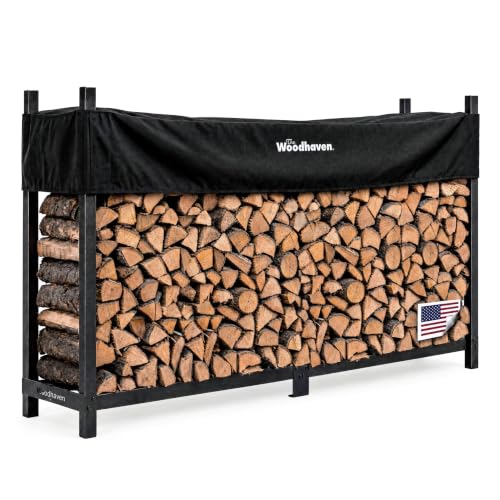
Woodhaven 8 ft firewood rack
Gets the bottom row off the soil, which is the row that otherwise never dries.
Cover the top and leave the sides open. A tarp down all four sides traps the moisture coming out of the wood.
Check price on Amazon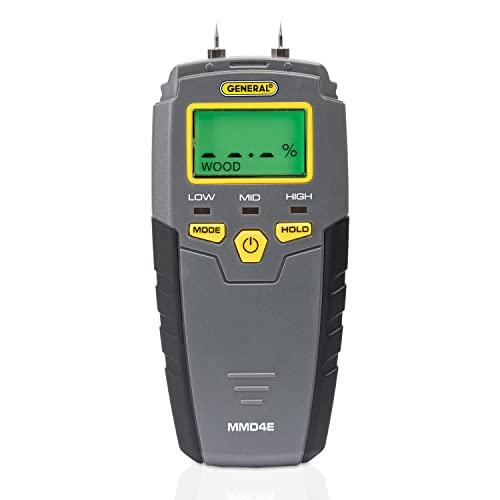
General Tools MMD4E moisture meter
Turns an argument about whether the wood is ready into a number, and EPA's number is under 20 percent.
Test a freshly split face. Greyed ends and cracks tell you about the surface, not the middle.
Check price on Amazon
Common questions
How dry does firewood need to be?
EPA says a moisture content of less than 20 percent is best for burning, and recommends checking it with a moisture meter rather than judging by eye. Wood above that is where most complaints about a stove come from: a fire that will not catch, glass that blackens, and less heat than the same wood would give dry.
How do you season firewood?
Split it, stack it off the ground where air moves through it, and cover the top while leaving the sides open. Splitting matters because bark resists drying and a split face does not. Time depends on species, climate and how it is stacked, so measure rather than counting months.
Should firewood be covered?
Cover the top, leave the sides open. A tarp over the whole stack keeps rain off and traps the moisture leaving the wood, so the pile never dries. EPA's firewood storage guidance is built around keeping wood off the ground and letting air move through it.
Why does firewood need to be off the ground?
Ground contact wicks moisture straight back into the bottom row, and that row then stays wet no matter how long the pile sits. Pallets, a rack, or rails are all fine. The point is a gap and airflow underneath.
How long does firewood take to dry?
Long enough that giving a single number would be a guess. Species, split size, climate and stacking all change it, and a year is a common rule of thumb rather than a measurement. A meter costs less than a face cord and answers the question for your wood in your climate.
Is it safe to store firewood indoors?
Bring in what you will burn in the next day or two rather than stacking a supply inside. Firewood carries insects that wake up in a warm room, and an indoor pile is also a fuel load next to a heat source. Keep the bulk of it outside and the indoor rack small.
Next
Sources: EPA Burn Wise, best wood-burning practices and EPA on building firewood storage.
Before you choose: Wood stove clearance to combustibles
Seasoned wood is half the safety picture. The other half is where the stove sits relative to anything that burns.
Read wood stove clearance to combustibles