
Power Guide
Generator Sizing: Running Watts, Starting Watts, and the Number That Actually Matters
Disclosure: we may earn a commission when you buy through some links on this page, at no extra cost to you. It does not affect what we recommend or how we rank it. How this works.
On a property with a well, the pump is usually the largest surge on the list. The well pump guide covers why, and what happens to water when the power stops.
Most people size a generator twice. Once by guessing, and once after the well pump trips it at two in the morning.
The arithmetic is genuinely simple, and it is not the sum of the numbers on the boxes. This guide covers the method, the reason motors break naive estimates, and the question wattage cannot answer at all.
Last updated: August 31, 2026 · Sourced from Generac
The Short Answer
Generac states the method plainly: “Total kW Required = (Sum of all running wattages) + (Highest single starting wattage burst)”. (Generac)
Every running load adds up. Only one starting surge does, because only one motor is starting at any given instant.
Two Numbers on Every Nameplate
Generac defines running wattage as “the steady-state power the appliance draws during normal operation”, and starting wattage as “the burst of power needed to start the motor”, which for motor-driven appliances is often two to three times the running figure.
The gap is bigger than most people expect. Generac gives a three-ton air conditioner as an example: roughly 3.5 to 5 kilowatts running, and 15 to 18 kilowatts to start. The same machine, seconds apart, asking for three to four times as much.
Generators carry the same two numbers, and they are not interchangeable either. A generator holds its running rating continuously and its starting rating only briefly. Comparing your total against the bigger number on the box is how people end up with a machine that cannot actually carry the house.
Why Motors Do This
A stopped motor offers very little resistance to current. It draws hard until it is turning, then settles. That inrush lasts a moment, but a generator has to supply it or the motor stalls and the breaker trips.
This is why the appliances that break a sizing estimate are always the same ones: well pumps, submersible pumps, refrigerators, freezers, air conditioners, air compressors, sump pumps, and larger power tools. Anything that has to get something spinning.
Resistive loads do not behave this way at all. Lights, kettles, heaters, and element-based cookers draw what they draw from the instant they switch on. Their starting and running figures are the same number.
Work Out Your Own Number
Read the running and starting watts off each appliance nameplate and enter them here. Leave out anything you are willing to switch off during an outage. There are no built-in figures, because the only wattage that describes your refrigerator is the one printed on your refrigerator.
| Appliance | Running watts | Starting watts | Remove |
|---|---|---|---|
Enter at least one running wattage to see a total.
This does arithmetic on the numbers you entered. It is not an electrical recommendation, it does not account for your panel, your service, or how a generator would be connected to your house, and it cannot tell you whether a given generator is safe for your situation.
You Decide What Runs at Once
The largest lever in sizing is not the generator. It is the list. Every appliance you agree to switch off during an outage comes straight off the total, and outage loads are not the same as everyday loads.
Staggering is the other half of it. If you avoid starting two motor loads in the same moment, you only ever need to cover the largest single surge, which is what the formula already assumes. Running the well pump and then the freezer, rather than both together, genuinely lowers the requirement.
Write the outage list before you shop. Refrigeration, water, heating controls, and a few lights carry most households. Laundry, dishwashing, and electric cooking are usually the things worth agreeing to go without.
Selected Circuits or the Whole House
| Selected circuits | Whole house | |
|---|---|---|
| What you size for | A list you chose | Everything that might start |
| Generator size | Smaller | Considerably larger |
| Fuel use | Lower | Higher, continuously |
| Effort during an outage | You manage what is on | Little to none |
| Portable machine works | Usually | Usually not |
For most homesteads the honest answer is selected circuits. The things that genuinely cannot wait are refrigeration, water, and keeping a heating system running. Those are a modest load once you stop trying to power the whole house at once.
What a Wattage Number Cannot Tell You
Everything on this page is about how much power a generator can supply. None of it says anything about whether a given generator is appropriate for your home’s service or panel, or about how it should be connected.
Connecting a generator to house wiring is a separate decision with real danger attached, including backfeed onto utility lines. That belongs to an electrician and to your local rules, and it is covered in the interlock versus transfer switch guide.
Run generators outdoors only, well away from doors, windows, and vents. Carbon monoxide from a generator is odourless and has killed people who ran one in a garage with the door open.
Measure Rather Than Estimate
Nameplates give a maximum, not what the appliance actually pulls in your house. An older refrigerator and a new one with the same nameplate can behave very differently, and published tables of typical wattages describe somebody else’s appliances.
A plug-in meter settles it for anything on a standard outlet. Leave it on the refrigerator for a day and you get the real running draw rather than a figure from a chart. Hard-wired loads, well pumps and furnaces among them, cannot be measured this way, so those stay on nameplate figures.
Worth Having Before the Outage
One of these is a safety item rather than a convenience. The other two support the method on this page: measure what you actually draw, and keep the fuel usable between outages.
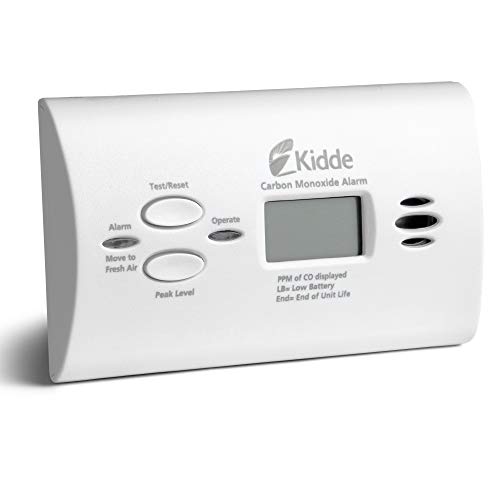
Battery powered carbon monoxide alarm
A generator produces carbon monoxide you cannot smell, and it runs during exactly the outage when a plug-in alarm has no power. Battery operation is the point.
Test the battery before the next outage, not during it. This is the same alarm recommended on the interlock guide, because it is the same requirement.
Check price on Amazon
Plug-in watt meter
Turns the sizing exercise from an estimate into a measurement. Leave it on the refrigerator for a day and you have its real running draw rather than a figure from somebody else's chart.
Only works for appliances on a standard outlet. Well pumps and furnaces are hard-wired, so those stay on nameplate figures.
Check price on Amazon
Enzyme fuel treatment
A standby generator's usual failure is stale fuel, not a worn engine. Treated fuel is the difference between a machine that starts in an outage and one that does not.
Treatment slows fuel ageing, it does not stop it. Run the generator periodically and follow the manufacturer's storage guidance for your model.
Check price on Amazon
Common Mistakes
- Adding every starting watt together. Only one motor starts at a time. This one inflates the answer most.
- Comparing your total to the generator’s starting rating. Your continuous load has to fit inside the running rating.
- Forgetting the well pump. Often the single largest surge on a rural property, and easy to overlook because it is out of sight.
- Sizing by square footage. Generac addresses this directly. Loads decide it, not floor area.
- Buying far too big for safety. Oversizing costs money at purchase and fuel every hour it runs.
- Treating wattage as an installation answer. It is not. How it connects to the house is a separate question.
Common questions
How do I calculate what size generator I need?
Add up the running watts of everything you want on at once, then add the single largest starting surge among them. Generac states the method as total kilowatts required equals the sum of all running wattages plus the highest single starting wattage burst. You add only one surge because only one motor starts at any given instant.
What is the difference between running watts and starting watts?
Running watts is what Generac calls the steady-state power the appliance draws during normal operation. Starting watts is the burst of power needed to start the motor, and for motor-driven appliances it is often two to three times the running figure. A generator can hold its running figure all day and its starting figure only for a moment.
Why do refrigerators and well pumps need so much more to start?
Because an electric motor at rest has almost no resistance to the current flowing through it, and it draws heavily until it is spinning. That is why a pump that runs on a modest number of watts can trip a generator at the instant it kicks in. Anything with a motor or a compressor behaves this way.
Do I add up the starting watts of everything?
No, and doing so is the most common sizing mistake. Only one motor starts at a time in practice. Adding every surge together produces a number far larger than you need and sends people towards a generator that is heavier, thirstier, and more expensive than the job requires.
Is a bigger generator always safer?
No. Generac puts it directly: bigger is not always better, and oversizing means overpaying at purchase and every time it runs. A generator running at a small fraction of its capacity also burns more fuel per useful watt than a right-sized one, which matters when you are carrying cans of it.
Can I work out generator size from my house square footage?
No. Generac addresses this specifically, saying the goal is to match your generator to your peak electrical load, not your square footage. Two identical houses with different appliances have completely different requirements. Only the loads you intend to run matter.
Does the right wattage mean a generator is safe to connect to my house?
No, and this is the most important limit on everything here. Wattage describes what a generator can supply. It says nothing about your panel, your service, or how the generator would be connected. Connecting a generator to house wiring is a separate question with real danger attached, covered in the interlock and transfer switch guide.
How much fuel will it use?
It depends on load far more than on size. A generator throttled down to a light load uses much less than the same machine near capacity, which is one practical argument for not oversizing. Manufacturers publish runtime at a stated load percentage, so compare those figures at the same load rather than comparing tank sizes.