
Home Backup Power Safety Guide
Generator Interlock vs Transfer Switch: What Actually Stops Backfeed
Disclosure: we may earn a commission when you buy through some links on this page, at no extra cost to you. It does not affect what we recommend or how we rank it. How this works.
A generator interlock and a transfer switch solve the exact same problem. That problem is backfeed. Backfeed happens when power from your generator runs backward into your house wiring. From there it travels out onto the utility lines outside. An interlock is a metal plate that locks onto your own breaker panel. It is usually the cheaper path. A transfer switch is a separate device mounted next to your panel. It comes as manual or automatic. In many places it is the simpler one to get permitted. Both are correct answers to the same question. Neither one is safe to buy online without matching it to your exact panel first. That single fact is why this page will not tell you which product to buy.
Last updated: August 31, 2026 · Sourced from OSHA, the U.S. Consumer Product Safety Commission, electric utilities, and generator and transfer switch manufacturers.
Why Backfeed Can Kill the Person Fixing Your Power
When a storm knocks out power on your street, a utility crew comes to fix it. Before they touch a single wire, they treat every line as live. That is standard practice. OSHA trains workers to “consider all electrical equipment, lines and conductors to be energized” (OSHA). A line that looks dead can still carry current.
A generator connected the wrong way breaks that safety assumption. OSHA names the cause directly: “the improper connection of portable generators to a building’s electrical system is one way hazardous backfeed conditions are created” (OSHA). Power from the generator travels back through your panel. From there it goes out through your meter. It reaches the same lines a crew believes are shut off.
Generac builds transfer switches, and it states the same risk in plain terms. Workers repairing lines “may assume the lines are de-energized”, and backfed power “can seriously injure or kill them” (Generac). Generac names two more results. Generator power can clash with returning utility power. That can start a fire or destroy the generator. In many places, backfeeding is also a violation of the National Electrical Code. It is not just a bad idea.
A rural electric cooperative in Colorado names who is actually at risk: residents of the home, neighboring properties, and the utility’s own lineworkers and first responders (PVREA). Every choice on this page comes down to one rule. Keep generator power and utility power apart. They must never touch the same wire at the same time.
What an Interlock Actually Is
A generator interlock is a small metal plate. It attaches to the outside of your breaker panel. It sits over the main breaker and the breaker used for the generator. Mechanically, the plate makes it impossible to switch both breakers on at the same time. One or the other. Never both.
Reliance Controls builds backup power switching equipment. Its own installation manual describes the same principle. A mechanical interlock “prevents feedback by prohibiting these breakers from being in the ‘ON’ position at the same time” (Reliance Controls). A basic interlock kit applies that same idea. It works directly on the two main breakers already inside your panel. It does not add a separate box.
That simplicity is what makes an interlock the cheapest option covered on this page. It also means an interlock only ever powers the panel as a whole. You do not get to pre-select which circuits stay on, the way you can with some transfer switches. Whatever the generator can carry, you switch on using your existing breakers. Stay under the generator’s rated output.
What a Transfer Switch Actually Is: Manual vs Automatic
A transfer switch is a separate piece of equipment. It installs next to your main panel. It is not a change to the panel itself. Honda describes it plainly on its own site. A transfer switch “connects to the circuits in your electrical panel that you wish to power during an electrical outage” (Honda). You run the generator into the switch. That replaces running extension cords through the house.
The switch does the same core job as an interlock. Honda states the entire safety case in one line: “the house cannot be connected to both the generator and utility power at the same time” (Honda). Flip the switch one way and the panel draws from utility power. Flip it the other way and the panel draws from the generator. There is no position where both are connected.
Manual switches are the simpler and cheaper version. Honda calls them “very simple switches”. You use one where “you manually turn circuits on and off to manage the load on the generator” (Honda). You stay under what the generator can produce. Automatic switches watch utility power on their own. Honda’s automatic version “monitors the status of your utility power”. And “when power is restored, it automatically reconnects your home to utility source and disconnects it from the generator” (Honda). No one has to touch anything.
Automatic switches usually pair with a generator that starts itself. Manual switches usually pair with a portable generator you roll out and start by hand. Either type relies on the same physical rule as the interlock. One power source at a time. Never both.
Interlock vs Transfer Switch, Side by Side
The numbers below are typical ranges, not quotes. Your panel, your generator size, and your local labor rates all move the real number. Get an exact quote from a licensed electrician before you decide.
| Factor | Interlock kit | Manual transfer switch | Automatic transfer switch |
|---|---|---|---|
| Typical cost band | $100 to $400 installed | $400 to $1,200 installed | $1,500 and up installed |
| What it powers | Any circuit in your panel, one at a time, up to what the generator can carry | Only the circuits wired into the switch | Only the circuits wired into the switch |
| Permit and inspection | Usually required. Check locally. | Usually required. Check locally. | Usually required, plus a fuel or gas inspection for a standby generator |
| Panel compatibility | Must be listed for your exact panel brand and model | Not panel-dependent the same way, still needs a licensed install | Not panel-dependent the same way, still needs a licensed install |
| Runs on its own | No, you flip breakers by hand | No, you flip the switch by hand | Yes, starts and switches without you |
| Who it suits | A tight budget and an existing portable generator | Wanting dedicated circuits and comfortable flipping switches by hand | Wanting power restored automatically, usually with a standby generator |
The Panel Compatibility Problem
This is the part most articles skip, and it is the reason this page will not name a specific product to buy.
An interlock kit or a transfer switch is not one universal part. It is tested and listed for one panel brand, and often one panel model. A kit built for one manufacturer’s panel does not fit another manufacturer’s panel. That is true even when both panels look similar from the front.
Reliance Controls’ own installation manual shows how narrow this gets. That is true even within one company’s product line. It states plainly that its transfer panels “are UL listed for a number of interchangeable breakers” (Reliance Controls). The exact list is printed on a label inside the panel itself. It is not left to a buyer’s judgment.
That is the safety case in one sentence. A listing is not a suggestion. It is the tested proof that the device blocks backfeed the way it is supposed to. A kit can almost fit a panel it was never tested against. That can leave a gap where both breakers close at the same time. That gap defeats the entire purpose of the device.
This is also why an online buying decision is risky here. A product listing on a shopping site cannot see your panel. Only a person standing in front of it can confirm the match. They read the label inside the cover. That is a job for a licensed electrician, not a search filter. It is also why a generator cord or an inlet box needs the same care. Both have to match your generator’s exact amperage and plug configuration. Looking close enough is not good enough.
Permits, Inspection, and Your Utility
Requirements here are not one national rule. They come from three layers, and the three do not move together. The National Electrical Code itself is revised on a cycle. Your state or city adopts a given edition on its own schedule. That can be years apart from a neighboring county. Your local building department decides what needs a permit and an inspection. Your electric utility may separately want to know about backup power that connects to house wiring.
Both device types touch code, not just preference. Honda states it directly for a transfer switch. It is “required by the National Electric Code for any connection of power to a home” (Honda). A rural electric cooperative in Vermont says the same about anything wired into the house. “a transfer switch is required for permanently installed generators” (WECI).
None of that tells you what your own city requires. It does not tell you what your own utility wants notified. It does not tell you which code edition your area has adopted. Some places have rules that name interlocks directly. Some do not. Call your local building department and your utility before you buy anything. Let your electrician handle the permit.
Carbon Monoxide Is the Other Killer
Backfeed is not the only danger a generator carries into a power outage. Carbon monoxide is the quieter one, and it kills more people.
The Consumer Product Safety Commission tracked fatal carbon monoxide poisonings tied to engine-driven tools from 2012 to 2022. Generators caused the large majority. 749 deaths from 583 incidents involving a generator alone, out of 872 total deaths from every kind of engine-driven tool in the study (CPSC). Power outages were the single biggest trigger. That is 103 incidents and 139 deaths. Most happened during ice storms, snowstorms, and hurricanes. Those are exactly the moments a family reaches for a generator.
Most of these deaths happened inside a home. Most involved little to no attempt to vent the generator’s exhaust. The CPSC looked at fixed-structure home fatalities where information was known. In 66 percent of those cases, no one had tried to vent the exhaust at all. A working carbon monoxide alarm changes these numbers. Most homes in the study did not have one running. Only 4 percent of the fatalities the CPSC studied had an alarm known to be present. Most of those alarms had already failed. The cause was usually a dead battery, a battery installed wrong, or no power at all.
Safe Electricity is an industry safety group backed by electric utilities. It gives the practical version of the same rule. Keep the generator “in a dry, open, well-ventilated area away from the home or garage” (Safe Electricity). Install carbon monoxide alarms inside the home itself, not just near the generator.
OSHA’s own fact sheet is just as blunt. “DO NOT operate a generator indoors” (OSHA). The main circuit breaker should be “OFF and locked out prior to starting any generator”. OSHA ties that step directly to protecting utility line workers, not just the people inside the house.
When a Licensed Electrician Is the Answer
For any work at or inside your panel, the answer is always a licensed electrician. Not a handy friend. Not a video. An electrician.
Reliance Controls opens its own installation manual with a flat statement about the equipment it sells. “IS NOT FOR ‘DO-IT-YOURSELF’ INSTALLATION. It must be installed by a qualified electrician thoroughly familiar with all applicable electrical and building codes” (Reliance Controls). Honda says the same thing about its own products. “a licensed electrician will install the transfer switch into your home and connect it with the main breaker box” (Honda).
An electrician does more than turn wrenches. They confirm your panel’s exact brand and model against the manufacturer’s approved list. They size the device to what your panel and your generator can actually handle. They know what your local building department and utility expect, before the first breaker cover comes off. That is not a step you can shortcut by reading one more article. Not even this one.
Common Mistakes
- Backfeeding through a regular outlet. A generator wired into a wall outlet with a double-male cord, sometimes called a suicide cord, is both lethal and illegal. It bypasses every safeguard described on this page. Do not use one, and do not let anyone talk you into building one.
- Buying a kit before checking the panel label. A kit that is not listed for your exact panel does not give you the protection you are paying for. That is true no matter how well it appears to fit.
- Trusting a “universal” interlock kit. No panel is universal. A kit that claims to fit several brands cannot be tested against all of them the way a panel-specific kit is.
- Assuming a downed line near your house is safe. OSHA’s own guidance is to never make that assumption, even with your own power out. Treat every line as energized until a utility crew confirms otherwise.
- Skipping the permit because it is only for emergencies. The permit and inspection exist to confirm the device does what it claims. An uninspected connection carries the same backfeed risk as no device at all.
- Never testing the carbon monoxide alarm’s battery. The CPSC’s own numbers show most alarms present during a fatal incident had already failed. Test it now, not during the next outage.
Before You Decide: Size and Alternatives
Neither device is worth buying until you know how much generator you actually need. Our portable inverter generator guide walks through real wattage math. That way you are not sizing an interlock or a switch around a generator that cannot cover the circuits you actually want.
None of this applies if you skip a fuel-burning generator entirely. A battery power station never connects to your panel. Backfeed is not possible with one. It also will not run a well pump or a whole-house load for days, the way a larger fuel generator can. Our best solar generators for homesteads guide covers sizing for that path, if it fits your situation better.
Related Reading
Sources
- OSHA, Working Safely Around Downed Electrical Wires (Fact Sheet FS-3941)
- OSHA, Working Safely with Electricity (Fact Sheet FS-3942)
- U.S. Consumer Product Safety Commission, Fatal Incidents Associated with Non-Fire Carbon Monoxide Poisoning from Engine-Driven Generators and Other Engine-Driven Tools, 2012-2022 (July 2023)
- Poudre Valley Rural Electric Association, Understanding the Dangers of Electric Backfeeding
- Washington Electric Cooperative, Generator Safety
- Safe Electricity, Use Caution When Using Back-Up Generators
- Honda Power Equipment, How to Use a Transfer Switch for Generators
- Generac Support, Why You Should Never Back-Feed Your Electric Panel With a Generator
- Reliance Controls, Instructions for the Reliance Panel/Link, TR Series
Worth Buying No Matter Which One You Choose
A generator cord or an inlet box has to match your exact plug and amperage, so this page will not guess at those for you. A carbon monoxide alarm does not have that problem.
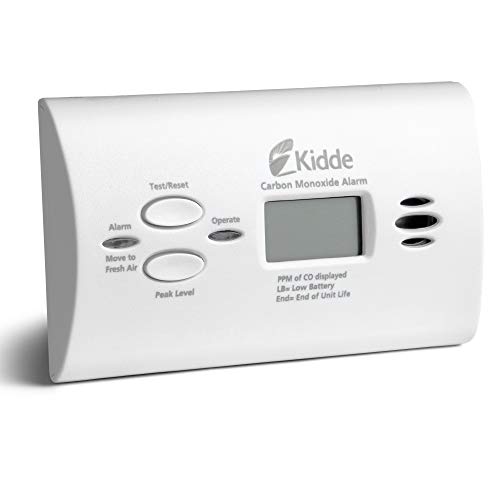
Battery powered carbon monoxide alarm
Works anywhere in the house on its own battery, including during the exact outage that has a generator running outside, when a plug-in-only alarm near a dead outlet would not.
Test the battery before the next outage, not during it. CPSC found that most alarms present during a fatal generator related incident had already failed, mostly from a dead or missing battery.
Check price on Amazon
Common questions
Can I install both an interlock kit and a transfer switch?
No, and you do not need to. Both solve the same backfeed problem in different ways. Installing one already does the job. Adding the second one adds cost and complexity without adding any real safety.
Which one is cheaper, an interlock or a transfer switch?
An interlock is almost always the lower-cost option. It works with breakers already inside your panel instead of adding a separate box. A manual transfer switch costs more. An automatic transfer switch costs the most. It is usually bundled with a standby generator that starts itself.
Is a generator interlock kit legal?
It depends on your local code adoption and your panel. Many places allow a properly listed interlock kit installed by a licensed electrician. Others require a transfer switch instead. Your local building department has the final answer for your address, not a product listing online.
Does my utility need to know I am running a generator?
It depends on how the generator connects. A portable generator powering a few plugged-in appliances through extension cords usually does not require utility notification, as long as it never touches your house wiring. Anything wired into your panel through an interlock or a transfer switch is different. Your electrician or your utility can tell you what your area expects.
What is a suicide cord, and why is it dangerous?
It is a homemade cord built to plug a generator directly into a wall outlet. It is both lethal and illegal, and it is the fastest way to backfeed your entire house onto the utility grid. Never build or use one, and do not let anyone talk you into it.
Can I avoid this decision entirely?
Yes, if you switch to a battery power station instead of a fuel-burning generator. A battery unit never connects to your home’s panel, so backfeed cannot happen. It also cannot run a well pump or a whole-house load the way a larger fuel generator can. The right choice still depends on what you actually need to power.
How do I know if an interlock kit really fits my panel?
Check the label inside your panel’s cover for the exact brand and model, then match that against the kit manufacturer’s approved list. A licensed electrician can confirm this in minutes. Do not rely on a kit’s marketing claiming it fits several panel brands at once.
Affiliate Disclosure: Some links on this page are affiliate links. If you buy through them, we earn a small commission at no extra cost to you. This supports the site and keeps our reviews independent. Full disclosure.
Where to buy a transfer switch
This is a part people prefer to buy somewhere the staff know what it is. CPO carries transfer switches alongside the generators they serve. Whatever you buy, the installation is still an electrician's job.
Compare transfer switches at CPO