
Rabbit Hutch
Disclosure: we may earn a commission when you buy through some links on this page, at no extra cost to you. It does not affect what we recommend or how we rank it. How this works.
Extension services publish a floor size and two mesh sizes for rabbit housing. Most hutch listings publish neither. So this page is about how to check one, not about which one to buy.
The numbers to check a listing against
- 30 in wide by 30 in deep by 20 in high, minimum, for one mature rabbit.
- 1 by 2 inch mesh for sides and top.
- 0.5 by 1 inch mesh for the floor.
- Shade, because heat is what kills rabbits.
- A latch a raccoon cannot work. No hutch is predator-proof.
Floor size and mesh from Penn State Extension. Those are floors, not targets, and large breeds need more.
Why there is no recommended hutch here
We looked. The hutches sold online are mostly unbranded, and the listings do not publish the two things that decide whether a hutch is adequate: usable floor dimensions and mesh size.
We could not confirm those figures for any of them, so we are not naming a pick. A recommendation we cannot check is worth less than the measurements above, which you can take to any listing yourself.
If a listing does not state interior dimensions and mesh size, that is information too. Ask the seller. A maker who knows their product can answer in one line.
Space, and what the figure does not cover
Penn State Extension gives individual cages for mature bucks and does as at least 30 by 30 by 20 inches. Read that as the smallest defensible box for one adult rabbit, not as a goal.
Two checks the number misses. A rabbit should be able to lie fully stretched out along one side. And it should be able to sit up on its back legs without its ears hitting the roof. A hutch can pass the floor measurement and fail both.
A doe with a litter needs room for a nest box on top of her own space. Fitting the box in by taking her floor away is how you end up with a doe kindling outside it.
Mesh, and why the floor is different
| Where | Mesh | Why |
|---|---|---|
| Sides and top | 1 by 2 in | Air and light, while keeping the rabbit in |
| Floor | 0.5 by 1 in | Waste falls through, feet and young rabbits do not |
The floor mesh is the specification people skip and the one that causes injuries. Too open and a rabbit catches a foot, or a young one falls through.
Give the rabbit somewhere to get off the wire regardless. A solid resting board or a mat in one corner lets it choose, which is the point.
Heat is the thing that kills rabbits
People plan rabbit housing around winter. The evidence points the other way.
Alabama Extension describes what heat stress does to rabbit production, and the list is longer than most people expect. Bucks go sterile. Does fail to breed, miscarry, abort, ignore newborns, or kindle on the wire instead of in the nest box. Rabbits also die of heat outright, with high losses.
Notice that most of that happens well before anything dies. A hutch in full afternoon sun can be failing all summer without looking like it is.
What extension guidance actually suggests
- Awnings over outdoor hutches for shade
- Water crocks or large bottles of cold water or ice placed in the hutch in extreme heat
- Cleanliness, good ventilation, close observation, and protection from sun and rain
A frozen bottle works because the rabbit decides when to lie against it. Site the hutch for afternoon shade first. Shade you do not have to remember beats cooling you do.
Predators, and the part people underestimate
No hutch is predator-proof, and rabbits have a problem chickens do not. A rabbit can die of fright. A raccoon that never gets in can still cost you the animal by working at the wire all night.
So the job is to end the attempt, not just survive it. Heavier mesh on the sides than the 1 by 2 inch minimum where a hutch sits at ground level. A latch that takes two movements. Legs, so nothing can work from underneath. And a check every night, which is the part that actually does the work.
The reasoning is the same as for poultry, and the hardware cloth guide covers mesh, fastening and aprons in more detail.
Feed and water that fit any hutch
No hutch pick here, because the listings do not publish dimensions. These do not depend on which hutch you own.
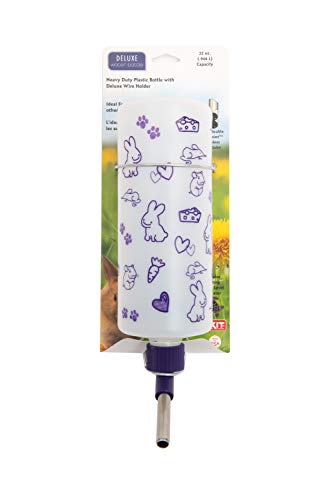
Lixit 32 oz weather-resistant water bottle
A rabbit in summer heat drinks more than a small bottle holds, and heat is the thing that actually kills rabbits.
Check it is not frozen through in winter. A bottle can look full and be solid.
Check price on Amazon
Pet Lodge steel feeder with lid
Mounts on the wire so it cannot be tipped, and the lid keeps rain and droppings out of the feed.
Holds several days of feed. That is convenience for you, not a reason to check on the rabbit less often.
Check price on Amazon
Where this page stops
Housing and equipment only. Feeding programs, breeding, illness and anything medical belong with a vet and your extension office. A rabbit that is off its food, or lying flat and breathing hard in heat, needs help now rather than a web page.
Common questions
What size hutch does a rabbit need?
Penn State Extension puts individual cages for mature bucks and does at a minimum of 30 inches wide, 30 inches deep and 20 inches high. That is a floor, not a target. Large breeds need more, and a rabbit should be able to stretch out fully and sit up without its ears touching the top.
What size wire mesh should a rabbit hutch use?
Penn State Extension specifies 1 by 2 inch mesh for the sides and top, and 0.5 by 1 inch mesh for the floor. The floor is the one that matters most. A floor mesh that is too open injures feet and lets young rabbits drop through.
Is a wire floor bad for rabbits?
Wire floors let waste fall through, which keeps a rabbit out of its own mess and is why they are used. The published floor mesh of 0.5 by 1 inch is what makes that safe. Whatever the floor, a solid resting board or mat gives the rabbit somewhere to get off the wire, and that is standard practice rather than an extra.
Can rabbits live outside in winter?
Rabbits handle cold much better than heat, and outdoor hutches are common. What they need is to be dry and out of the wind, with deep bedding and water that has not frozen solid. Extension winter guidance focuses on shelter from wind and wet rather than on heating.
What temperature is too hot for a rabbit?
Heat is the real danger, and it does damage before it kills. Alabama Extension describes heat stress causing sterility in bucks, and does miscarrying, aborting, ignoring newborns, or kindling on the wire instead of in the nest box. Rabbits also die of it outright. If you keep rabbits outdoors, shade and summer planning matter more than any winter preparation.
How do I keep a rabbit cool in summer?
Shade first. Extension guidance describes awnings over outdoor hutches, and putting water crocks or large bottles of cold water or ice into the hutch in extreme heat. A frozen bottle a rabbit can lie against works because the rabbit chooses when to use it.
Is a rabbit hutch predator-proof?
No hutch is. Raccoons open simple latches and reach through wire, and a rabbit can die of fright without being touched. Treat a hutch as predator-resistant: heavier mesh on the sides, a latch that takes two steps, and a nightly check. The same rules that apply to a chicken coop apply here.
Next
Sources: Penn State Extension, rabbit production for cage size and mesh, and Alabama Extension on summer heat and rabbit production. Ask your own extension office about your climate.