
Poultry Safety Guide
Do Chickens Need a Heated Coop? Heat Lamp Fire Risk and What Extensions Actually Say
Disclosure: we may earn a commission when you buy through some links on this page, at no extra cost to you. It does not affect what we recommend or how we rank it. How this works.
Every winter, coops burn down. Usually it is a heat lamp, and usually the person who hung it was trying to be kind.
The advice here is genuinely split, and pretending otherwise would not help you. Two land-grant extensions give different answers on whether to heat at all. This guide sets out both, explains what they agree on, and covers the approach that keeps birds through sub-zero nights without a heat source.
Last updated: August 31, 2026 · Sourced from University of Minnesota Extension, University of New Hampshire Extension, and eXtension Poultry
The Fact That Should Decide It
A coop is a small wooden box packed with dry bedding, and the occupants knock things over. University of New Hampshire Extension weighs that directly: “The risk of a heat source causing a fire is too high with combustible bedding materials present and given the tendency of chickens to knock things over”. (UNH Extension)
Meanwhile the birds are better equipped for cold than for the fire. eXtension Poultry: “Flocks can do well at sub-zero temperatures if you use a deep litter system and an in-bucket water warmer, with no external heat required”.
Where the Guidance Splits
This is worth showing rather than smoothing over, because you will find both positions quoted confidently online and neither is wrong.
| Source | Position on heating | Reasoning |
|---|---|---|
| UNH Extension | Advises against it in most circumstances | Fire risk from bedding and knocked-over equipment |
| UMN Extension | Supplemental heat below 35°F | Placed low, with explicit fire-safety rules attached |
| eXtension Poultry | No external heat required | Deep litter plus a water warmer covers sub-zero |
UMN Extension states: “When temperatures fall below 35 degrees Fahrenheit, provide supplemental heat at the height of the nest boxes or lower rung of the roost”. (UMN Extension) Note the placement instruction. It is low, near the birds, not hanging above dry litter.
How to reconcile them. Healthy adult birds in a dry, draft-free, ventilated coop do not need heat, and adding it introduces a risk they did not have. Heat is a judgement call for specific situations: young birds off the brooder, a sick or recovering bird, an unusually exposed coop, or a genuine extreme. If you decide the situation calls for it, the rules in the next section are not optional.
If You Do Use a Heat Source
UMN Extension publishes the fire rules directly. These are quoted rather than paraphrased because the wording is precise.
- “Always read fire risk warnings and follow installation instructions when using heaters.”
- “Never hang a heat lamp by the cord.” A cord is not a structural support and the fitting is not designed to carry the lamp.
- “Lamps with a cage around the bulb can help prevent the bulb from contacting the bedding if the lamp were to fall.”
- “Keep all wires away from poultry, water, and flammable litter to prevent damage, shocks or fires.” Birds peck at cords.
Two practical additions that follow from those. Secure any lamp by a second independent means, such as a chain or wire, so the clamp is not the only thing holding it. And prefer a radiant panel or brooder plate over a bulb where you can. UMN lists radiant heaters, brooder plates and panels among the options, and a warm surface that cannot fall onto litter and shatter is a different risk profile from a hot glass bulb.
This guide does not recommend a heat lamp, and does not link to one. The fire risk is real, the extension guidance is divided, and a purchase link is not the right way to settle that for your coop. If you decide you need one, buy it locally where you can check the guard and the fitting in your hands.
Moisture Is the Real Enemy, Not Cold
Frostbite is usually blamed on temperature. The mechanism is wetter than that. UMN Extension: “High moisture in a coop, combined with cold temperatures can lead to condensation, which can cause frostbite”. eXtension Poultry describes frostbite as “more likely to occur during the nighttime hours in a cold, poorly ventilated coop with damp bedding”. (eXtension Poultry)
Chickens put a lot of water into the air. They breathe it out and their droppings release more. In a sealed coop that vapour has nowhere to go, so it condenses on the coldest surfaces, which include combs and wattles.
This is why sealing a coop to keep heat in makes frostbite more likely rather than less. What you want is draft-free at bird level, open at the top. Vents high above the roost let wet air leave without blowing across the birds.
UMN gives a test that needs no equipment: “If you smell ammonia or notice moisture collecting on objects or windows within the coop, you need to increase ventilation”.
The Approach That Works Without Heat
- Deep litter. UNH Extension recommends insulating the coop floor with “4-6 inches of a natural material such as straw or pine shavings”. eXtension adds a timing point: “Postpone cleaning out the coop until spring”, since the built-up layer is itself insulation.
- Liquid water. This is the one job that genuinely needs electricity. A bird that cannot drink cannot regulate itself, and frozen water is a daily problem in a way that cold air is not.
- Ventilation above the roost. High vents, no draft at bird level.
- A wide, flat roost. So birds can cover their toes. Covered in the roost design guide.
- Breeds that suit the climate. eXtension notes that small comb types, such as pea and strawberry, see much less frostbite than large-combed birds.
What Actually Helps in Winter
Neither of these is a heat source. They support the approach the extension guidance actually endorses: keep the water liquid, and keep the air dry enough that frostbite does not start.

Thermostatically controlled heated waterer
Liquid water is the one winter job that genuinely needs electricity, and eXtension names an in-bucket water warmer as part of the approach that needs no coop heat at all. This one is thermostatic, so it runs only when it has to.
It still needs a safe cord run. Keep the lead away from birds, bedding and standing water, the same as any powered item in a coop.
Check price on Amazon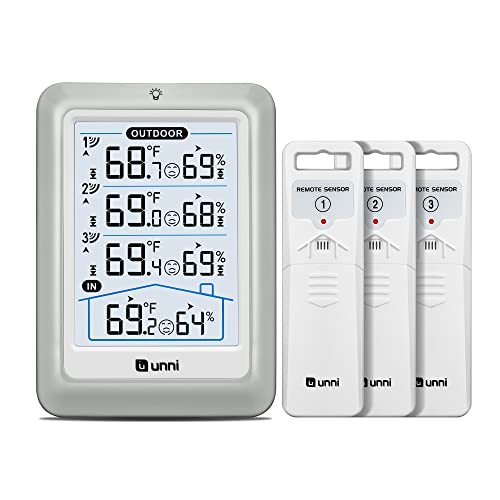
Wireless thermometer and hygrometer
Moisture causes frostbite, not cold alone, and humidity inside a closed coop is the thing you cannot judge by standing in it. A remote sensor tells you whether ventilation is keeping up.
A measuring tool, not a solution. If humidity is high the answer is more ventilation above the roost, not a heater.
Check price on Amazon
Common Mistakes
- Hanging a lamp by its cord. Named explicitly by UMN Extension, and it is how lamps end up in the bedding.
- Sealing every gap. Traps the moisture that causes the frostbite you were worried about.
- Heating instead of watering. Liquid water matters more than warm air.
- A full clean-out in December. Removes the insulating litter layer at the worst moment.
- Trusting a clamp alone. Anything hot needs a second, independent attachment.
- Judging warmth by how it feels to you. A feathered bird and a person in a coat want very different things.
Common questions
Do chickens actually need a heated coop in winter?
Usually not. eXtension Poultry states that flocks can do well at sub-zero temperatures if you use a deep litter system and an in-bucket water warmer, with no external heat required. A dry, draft-free, well-ventilated coop does more for a flock than a heat source does.
Why are heat lamps such a fire risk?
Because a coop is full of dry bedding and the birds knock things over. University of New Hampshire Extension advises against supplemental heat for exactly that reason, saying the risk of a heat source causing a fire is too high with combustible bedding materials present and given the tendency of chickens to knock things over. A bulb that touches straw does not need long.
If I do use a heat lamp, what are the rules?
University of Minnesota Extension gives them plainly: always read fire risk warnings and follow installation instructions, never hang a heat lamp by the cord, use lamps with a cage around the bulb so it cannot contact bedding if it falls, and keep all wires away from poultry, water, and flammable litter. Secure it by a second independent means, not only its own clamp.
Is there a temperature at which chickens do need heat?
Extension sources differ here. University of Minnesota Extension says that when temperatures fall below 35 degrees Fahrenheit, provide supplemental heat at the height of the nest boxes or lower rung of the roost. University of New Hampshire Extension advises against supplemental heat in most circumstances. Both are describing real risks, and this guide sets out how to reconcile them.
What causes frostbite in a coop, cold or damp?
Both together, and moisture is the part people control badly. University of Minnesota Extension states that high moisture in a coop, combined with cold temperatures, can lead to condensation, which can cause frostbite. eXtension Poultry adds that frostbite is more likely at night in a cold, poorly ventilated coop with damp bedding.
How do I know if my coop needs more ventilation?
University of Minnesota Extension gives a test you can do without instruments: if you smell ammonia or notice moisture collecting on objects or windows within the coop, you need to increase ventilation. Condensation on the inside of a window in the morning means the air is wetter than it should be.
Should I insulate or seal the coop for winter?
Insulate, but do not seal. A coop needs to stay draft-free at bird level while still letting moisture and ammonia escape at the top. Sealing a coop to keep heat in traps the water vapour the birds breathe out, and that is what causes frostbite. Draft-free and airtight are not the same thing.
Which birds are most at risk of frostbite?
Large-combed birds. eXtension Poultry notes frostbite is most common in roosters because they typically have larger combs and wattles, that any hen with a large comb such as a leghorn can be vulnerable, and that the incidence in smaller comb types such as pea and strawberry is much less. Breed choice is a winter decision as much as an egg-colour one.