
Buyer's Guide
Best Fermentation Crocks (2026)
Disclosure: we may earn a commission when you buy through some links on this page, at no extra cost to you. It does not affect what we recommend or how we rank it. How this works.
Fermentation is the oldest food preservation method. Before refrigerators, before pressure canners, before vacuum sealers — there was salt and time. The right crock makes the process nearly foolproof. The wrong one creates headaches.
Last updated: October 6, 2026
Quick verdict
- Best overall: Ohio Stoneware Water-Seal Crock, USA-made, foolproof, lasts a lifetime
- Best compact: Humble House SAUERKROCK, great for apartments and small batches
- Best glass: Mortier Pilon, see your ferment without opening the jar
- Best budget: Nourished Essentials Easy Fermenter, use your existing Mason jars
- Best large batch: Seeutek 1.3 gallon crock, for kimchi and big sauerkraut batches
Water-seal, open-top, or airlock, what's the difference?
Water-seal crock
The lid sits in a channel of water around the crock's rim. CO2 from fermentation bubbles out through the water. Air cannot get in. You never open the crock during fermentation. This is the most hands-off method, set it and check it in a week.
Open-top crock
Traditional design. Vegetables are packed down, covered with a weight, and topped with a cloth or loose lid. You check daily to make sure vegetables stay submerged. Kahm yeast (a harmless white film) is more common. More hands-on, but works well once you learn the process.
Airlock lid on a Mason jar
A plastic lid with a one-way airlock valve. CO2 escapes, air stays out. Works identically to a water-seal crock but uses jars you already own. Best budget option. Not ideal for batches larger than 1 gallon per jar. Need jars? Our canning supplies guide covers wide-mouth jars and lids.
Our top picks
Ohio Stoneware 3 Gallon Fermentation Crock Set
Ohio-made stoneware, lead-free glaze
Price band
$50 to $100
Type
Water-seal crock
Capacity
3 gallons
Pros
- +Water-seal lid creates an anaerobic environment, no monitoring needed
- +Made in USA
- +Heavy stoneware stays cool and stable during fermentation
- +Lasts decades, generation-level durability
- +Comes with lid, weights, and water channel
Cons
- -Heavy, not easy to move when full
- -Most expensive option in this category
- -Water channel must be kept topped off
Most foolproof fermentation setup for beginners
Humble House Sauerkrock (1 gallon)
German-made stoneware
Price band
Under $100
Type
Water-seal crock
Capacity
1 gallon
Pros
- +European-style water-seal design
- +Comes with stone weights
- +Smaller size is good for apartment fermenters
- +Dishwasher safe (except lid gasket)
Cons
- -1.3L is small, one head of cabbage fills it
- -German import, sometimes out of stock
- -Lid design is less intuitive than Ohio Stoneware
Best for small kitchens and apartment fermenters
Mortier Pilon Fermentation Crock (2L)
Borosilicate glass + stainless steel lid with airlock
Price band
Under $100
Type
Glass jar with airlock
Capacity
2 litres
Pros
- +See-through, watch fermentation progress from outside
- +Airlock releases CO2 without letting air in
- +Glass is odor-neutral (stoneware can absorb smells over time)
- +Dishwasher safe
- +Easy to confirm there is no mold without opening
Cons
- -Can crack if temperature changes quickly
- -Not as heavy, can tip over on a crowded counter
- -Glass does not insulate as well as stoneware
Best if you want to watch the fermentation process
Easy Fermenter Airlock Lids (wide mouth)
BPA-free plastic airlock lid
Price band
Under $50
Type
Airlock lid for Mason jars
Capacity
Fits wide-mouth jars
Pros
- +Cheapest option, uses Mason jars you likely already own
- +Airlock built into lid: CO2 escapes, no air gets in
- +Works with quart and half-gallon wide-mouth jars
- +Dishwasher safe
Cons
- -Requires Mason jars (sold separately)
- -Less elegant than a dedicated crock
- -Not suited for large batches over 1 gallon
Best budget option if you already have Mason jars
Seeutek Fermentation Crock (1.3 gallon)
Ceramic, water-seal design
Price band
$50 to $100
Type
Water-seal crock
Capacity
1.3 gallons
Pros
- +Largest capacity of the crocks compared here (5L)
- +Water-seal design
- +Comes with stone weights and tongs
- +Good for making kimchi by the gallon
Cons
- -Very heavy when full, around 15 lbs
- -Water channel is narrower, which makes it harder to fill
- -Less brand history than Ohio Stoneware
Best for high-volume fermenters making big batches
Getting started: sauerkraut in 3 ingredients
Sauerkraut needs only cabbage, salt, and time. That is it. No vinegar, no water, no starter culture. The lactobacillus bacteria that ferment the cabbage are already on the leaves. You just need to create the right environment.
Basic ratios
- Use 2% salt by weight. Weigh the shredded cabbage, then multiply by 0.02. Example: 1,000g of cabbage needs 20g of salt.
- Use non-iodized salt only, kosher, sea salt, or Himalayan pink. Iodine kills the bacteria you want.
- Pack the cabbage down until the brine rises above the vegetables. If there is not enough brine after 30 minutes, add a 2% salt-water solution.
Fermentation is active at 7 days. Full sour flavor comes at 4–6 weeks. Both are correct, it depends on how you like it.
Himalayan pink salt (non-iodized)
The most popular fermentation salt. Non-iodized, mineral-rich, consistent results.
Kitchen scale (essential for 2% ratio)
You cannot reliably measure 2% salt by volume. A $10–20 kitchen scale removes the guesswork.
Affiliate links.
Troubleshooting
| What you see | What it means | What to do |
|---|---|---|
| White film on top | Kahm yeast, harmless | Skim it off and continue. Not mold. |
| Pink or black mold | Actual mold contamination | Discard the batch. Start over. Usually caused by vegetables not staying submerged. |
| No bubbles after 3 days | Fermentation is too slow | Move the crock somewhere warmer. Below 65°F, fermentation is very slow. Above 75°F, it speeds up. |
| Very sour, mushy texture | Over-fermented | Still safe to eat. Move to cold storage earlier next batch, refrigeration stops fermentation. |
Cold slows a ferment down. A fridge handles a jar or two. If you put up whole crocks at a time, see our root cellar guide for cold storage that needs no power.
Related reading
Supplies you will buy again
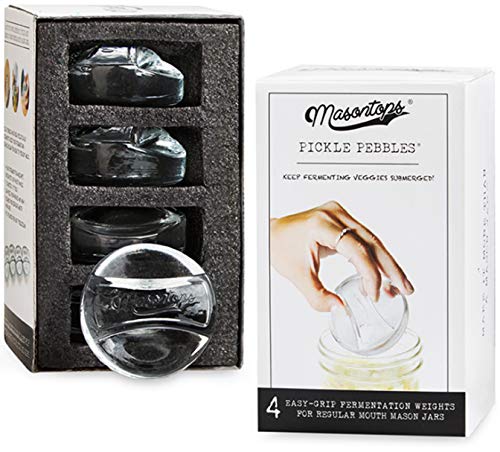
Glass fermentation weights
Vegetables must stay under the brine. Anything that floats up will grow mold.
Check price on Amazon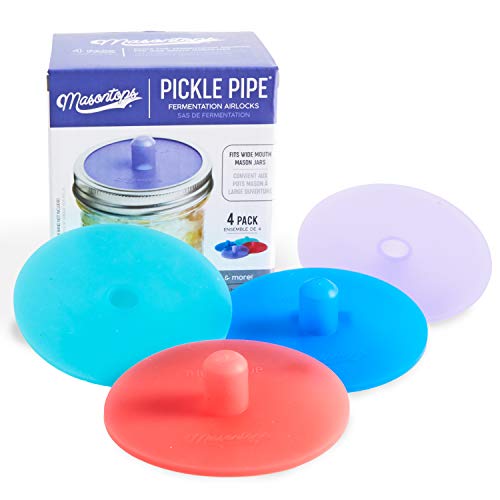
Airlock fermentation lids
Lets the gas out and keeps air from getting in. Turns a mason jar into a small crock.
Check price on Amazon
Common questions
What is the best crock for sauerkraut?
The Ohio Stoneware Water-Seal Crock is the best for sauerkraut. The water-seal lid creates a true anaerobic environment without any monitoring. Made in the USA from lead-free stoneware. One crock lasts decades.
Do you need a water-seal crock to ferment?
No. You can ferment successfully in a regular wide-mouth Mason jar with a cloth cover or an airlock lid. Water-seal crocks make the process easier and more hands-off, but they are not required. Many experienced fermenters use half-gallon jars.
How long does lacto-fermentation take?
Sauerkraut is edible after 7 days at room temperature, but full flavor develops at 4–6 weeks. Kimchi ferments faster, 1–5 days at room temperature depending on how active you want it. Temperature matters: cold slows fermentation, heat speeds it.
Is it normal to see bubbles in a fermentation crock?
Yes. Bubbles are a sign that lactobacillus bacteria are active and producing CO2. This is exactly what you want. A water-seal crock releases these bubbles through the water channel. If you see no bubbles after 3–4 days, the temperature is likely too cold.
Can you use regular table salt for fermentation?
Technically yes, but it is not recommended. Regular table salt contains iodine, which can inhibit the lactobacillus bacteria you want to grow. Use non-iodized salt: kosher salt, sea salt, or Himalayan pink salt. Aim for 2% salt by weight of the vegetables.
Affiliate disclosure: Some links on this page are affiliate links. If you buy through them, we earn a small commission at no extra cost to you. Full disclosure.